
The GRM Institute of Technology
GRM Institute is more than just a school; it is a catalyst for economic transformation in rural Uganda.
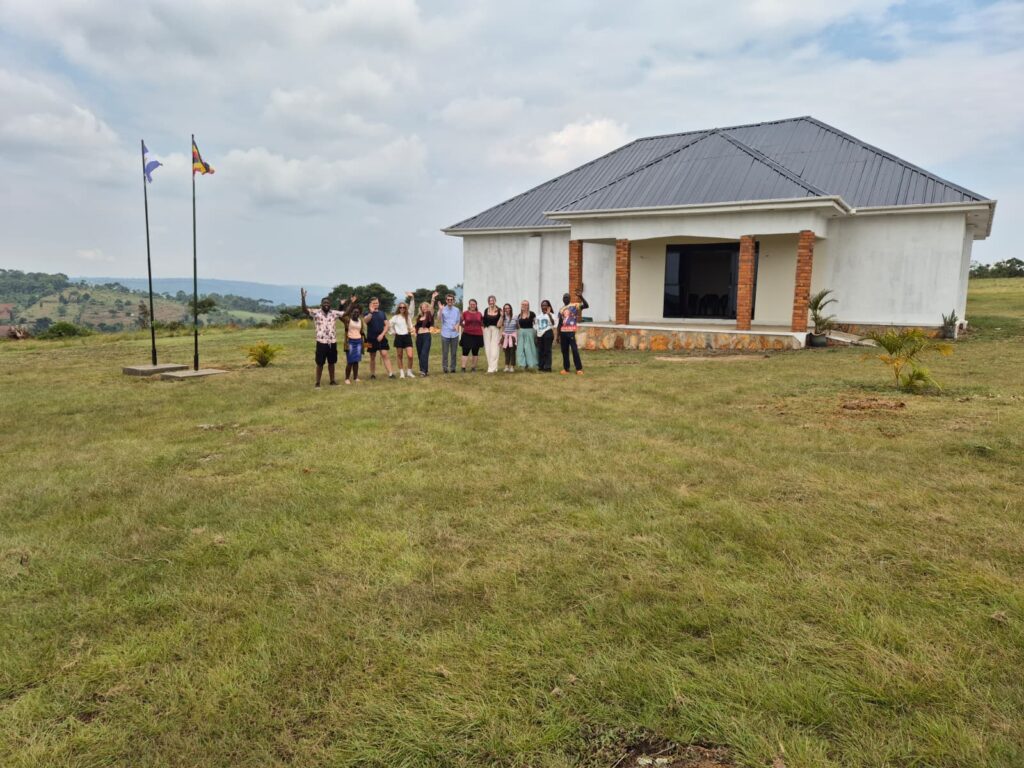
Institute Proposal: The GRM Institute of Technology
Location: Buikwe District, Central Uganda
Proposed Focus: Computer Vision, Artificial Intelligence (AI), and Robotics
Target Start Date: TBD
1. Executive Summary
The GRM Institute of Technology proposes to establish a pioneering educational and research hub in Buikwe District, focused on the synergistic fields of Computer Vision, Artificial Intelligence, and Robotics. By integrating a world-class curriculum with a deep understanding of local challenges and opportunities, BIIS aims to develop a new generation of Ugandan technologists. These graduates will be equipped not only for global careers but also to apply intelligent systems to solve pressing local problems in agriculture, healthcare, infrastructure, and education, thereby driving sustainable economic growth in the region .
2. Rationale: Why Buikwe District?
While Buikwe faces significant educational infrastructure challenges, as highlighted by recent reports of classroom shortages and low attendance , it is precisely this environment that offers a unique opportunity.
Untapped Potential: Buikwe is a region with a young, dynamic population. An institute like The GRM Institute of Technology can transform the educational landscape by offering a high-tech, aspirational pathway for students, shifting focus from immediate survival to future innovation .
Addressing Local Challenges with Technology:
Agriculture: The district has a strong agricultural base, including coffee farming . The GRM Institute of Technology students can develop computer vision systems to detect crop diseases, AI to optimize yields, and robotics for precision agriculture.
Logistics & Trade: Situated on the shores of Lake Victoria, Buikwe has potential for trade. AI and robotics can be applied to improve supply chain efficiency and quality control for local produce.
Infrastructure & Planning: Drones and computer vision can be used to map the district, monitor road conditions, and assist in evidence-based planning for new schools and facilities .
A Model for Rural Tech Education: The GRM Institute of Technology can become a proof-of-concept for how advanced technological education can thrive outside of major urban centers like Kampala, preventing brain drain and fostering decentralized development.
3. Vision and Mission
Vision: To be Uganda’s leading center of excellence in Intelligent Systems, empowering a new generation of innovators to transform their communities and compete globally.
Mission: To provide a rigorous, hands-on, and ethically grounded education in Computer Vision, AI, and Robotics, fostering research and innovation that directly addresses national and regional development goals.
4. Proposed Programs and Curriculum
The curriculum will be inspired by successful models from institutions like Newcastle University and Queen’s University Belfast, adapted for the Ugandan context and regulatory requirements of the National Council for Higher Education (NCHE) .
Program 1: Diploma in Intelligent Systems (2 Years)
Target: Secondary school leavers (UACE certificate).
Goal: To produce skilled technicians and technologists who can build, maintain, and program robotic and AI systems. This aligns with the proposed Engineering Professionals Bill, which recognizes the critical role of technologists and technicians .
Core Modules:
Year 1: Fundamentals of Programming (Python), Basic Electronics and Mechatronics, Mathematics for Intelligent Systems (Linear Algebra, Calculus), Introduction to AI and Computer Vision.
Year 2: Embedded Systems and Microcontrollers, Robotics Operating System (ROS) Basics, Data Collection and Annotation, Industrial Automation and Control.
Program 2: Bachelor of Science in Intelligent Systems (3-4 Years)
Target: Diploma holders and UACE graduates with strong math/physics backgrounds.
Goal: To produce engineers and innovators capable of designing, deploying, and managing complex intelligent systems. Graduates will be on a path to qualify as registered engineering professionals under the new Engineering Professionals Board